“Vintage minimalist restaurant logo for "Caffè Florian", retro cloche dome with steam and "Est. 1720" banner, classic typography, warm brown and cream tones, subtle texture on light background, vector emblem style.”
Distilled version of Black Forest Labs' FLUX.2 [dev] outperforming it at a cheaper price. Developed by fal.ai.
Details
flux.2-dev-turbo
Starting from
Prices shown are in USD · Some prices estimated from per-megapixel or per-token pricing
Full pricing detailsProvider Performance
Fastest generation through fal at 5,963ms median latency with 100.0% success rate.
Aggregated from real API requests over the last 30 days.
Generation Time
Success Rate
Time to First Byte
Provider Rankings
| # | Provider | p50 Gen Time | p95 Gen Time | Success Rate | TTFB (p50) |
|---|---|---|---|---|---|
| 1 | fal | 5,963ms | 9,762ms | 100.0% | 5,155ms |
Providers & Pricing (2)
FLUX.2 [dev] Turbo is available from 2 providers, with per-image pricing starting at $0.008 through fal.ai.
All modes
fal/flux.2-dev-turbo
fal/flux.2-dev-turbo-edit
Input
Output
Pricing Notes (4)
- • Resolution is rounded up to the next megapixel, separately for each reference image and the generated image
- • 1 megapixel = 1024x1024 pixels
- • Each reference image is counted separately (minimum 1 MP each)
- • Images exceeding 4 megapixels are resized to 4 megapixels
FLUX.2 [dev] Turbo API OpenAI-compatible
Integrate text-to-image generation and complex image editing into any application using the Lumenfall OpenAI-compatible API to access FLUX.2 [dev] Turbo. This endpoint enables programmatic creation of high-fidelity visual media through a single unified integration point.
https://api.lumenfall.ai/openai/v1
flux.2-dev-turbo
Code Examples
Text to Image
/v1/images/generationscurl -X POST \
https://api.lumenfall.ai/openai/v1/images/generations \
-H "Authorization: Bearer $LUMENFALL_API_KEY" \
-H "Content-Type: application/json" \
-d '{
"model": "flux.2-dev-turbo",
"prompt": "",
"size": "1024x1024"
}'
# Response:
# { "created": 1234567890, "data": [{ "url": "https://...", "revised_prompt": "..." }] }
import OpenAI from 'openai';
const client = new OpenAI({
apiKey: 'YOUR_API_KEY',
baseURL: 'https://api.lumenfall.ai/openai/v1'
});
const response = await client.images.generate({
model: 'flux.2-dev-turbo',
prompt: '',
size: '1024x1024'
});
// { created: 1234567890, data: [{ url: "https://...", revised_prompt: "..." }] }
console.log(response.data[0].url);
from openai import OpenAI
client = OpenAI(
api_key="YOUR_API_KEY",
base_url="https://api.lumenfall.ai/openai/v1"
)
response = client.images.generate(
model="flux.2-dev-turbo",
prompt="",
size="1024x1024"
)
# { created: 1234567890, data: [{ url: "https://...", revised_prompt: "..." }] }
print(response.data[0].url)
Image Edit
/v1/images/editsParameter Reference
Core Parameters
| Parameter | Type | Description | Modes |
|---|---|---|---|
prompt
|
string | Required. Text prompt for image generation |
T2I
Edit
|
seed
|
integer | Random seed for reproducibility |
T2I
Edit
|
Size & Layout
| Parameter | Type | Description | Modes |
|---|---|---|---|
size
|
string |
Image dimensions as WxH pixels (e.g. "1024x1024") or aspect ratio (e.g. "16:9")
WxH determines both shape and scale (aspect_ratio and resolution are ignored when size is provided). W:H format is equivalent to aspect_ratio.
|
T2I
Edit
|
aspect_ratio
|
string |
Aspect ratio of the output image (e.g. "16:9", "1:1")
Controls shape independently of scale. Use with resolution to control both. If size is also provided, size takes precedence. Any ratio is accepted and mapped to the nearest supported value.
|
T2I
Edit
|
resolution
|
string |
Output resolution tier (e.g. "1K", "4K")
Controls scale independently of shape. Higher tiers produce larger images and cost more. If size is also provided, size takes precedence for scale. Any tier is accepted and mapped to the nearest supported value.
|
T2I
Edit
|
size
Exact pixel dimensions
"1920x1080"
aspect_ratio
Shape only, default scale
"16:9"
resolution
Scale tier, preserves shape
"1K"
Priority when combined
size is most specific and always wins. aspect_ratio and resolution control shape and scale independently.
How matching works
7:1 on a model with
4:1 and 8:1,
you get 8:1.
0.5K 1K 2K 4K)
or megapixel tiers (0.25 1).
If the exact tier isn't available, you get the nearest one.
Media Inputs
| Parameter | Type | Description | Modes |
|---|---|---|---|
image
|
file |
Required.
Input image(s) to edit
Supports PNG, JPEG, WebP.
|
T2I
Edit
|
Output & Format
| Parameter | Type | Description | Modes |
|---|---|---|---|
response_format
|
string |
How to return the image
url
b64_json
Default:
"url" |
T2I
Edit
|
output_format
|
string |
Output image format
png
jpeg
gif
webp
avif
Gateway converts to requested format if provider doesn't support it natively.
|
T2I
Edit
|
output_compression
|
integer | Compression level for lossy formats (JPEG, WebP, AVIF) |
T2I
Edit
|
n
|
integer |
Number of images to generate
Default:
1Gateway generates multiple images in parallel even if provider only supports 1.
|
T2I
Edit
|
Additional Parameters
| Parameter | Type | Description | Modes |
|---|---|---|---|
cfg_scale
|
number | Classifier-free guidance scale — higher values stick more closely to the prompt |
T2I
Edit
|
enable_prompt_expansion
fal
|
boolean | If set to true, the prompt will be expanded for better results. |
T2I
Edit
|
enable_safety_checker
fal
|
boolean | If set to true, the safety checker will be enabled. |
T2I
Edit
|
sync_mode
fal
|
boolean | If `True`, the media will be returned as a data URI and the output data won't be available in the request history. |
T2I
Edit
|
Parameter Normalization
How we handle parameters across different providers
Not every provider speaks the same language. When you send a parameter, we handle it in one of four ways depending on what the model supports:
| Behavior | What happens | Example |
|---|---|---|
passthrough |
Sent as-is to the provider | style, quality |
renamed |
Same value, mapped to the field name the provider expects | prompt |
converted |
Transformed to the provider's native format | size |
emulated |
Works even if the provider has no concept of it | n, response_format |
Parameters we don't recognize pass straight through to the upstream API, so provider-specific options still work.
FLUX.2 [dev] Turbo Benchmarks
FLUX.2 [dev] Turbo holds the fourth position globally in text-to-image generation with an Elo rating of 1272. This distilled model by fal.ai consistently outperforms the original FLUX.2 [dev] across speed and quality metrics in competitive human-preference environments.
Text-to-Image Landscape
Elo vs Cost
Elo vs Speed
Competition Results
“Create a clean, modern vector infographic poster about the Apollo 11 mission. NASA-inspired palette (navy, white, muted red, light gray). Flat-vector style, crisp lines, consistent iconography, subtle gradients only. Steps (stop at landing): 1. Launch (Saturn Vicon) 2. Earth Orbit (Earth + orbit ring icon) 3. Translunar (trajectory arc icon) 4. Lunar Orbit (Moon + orbit ring icon) 5. Descent (lunar module descending icon) 6. Landing (lunar module on the surface icon) Small supporting elements (minimal text): • Crew strip: three silhouette icons with only last names: Armstrong, Aldrin, Collins. • Landing site marker: Moon pin labeled "Tranquility" only. Layout constraints: generous margins, large readable labels, clean background with subtle stars. Vector-only, print-poster look, high resolution.”
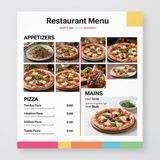
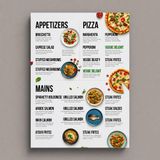
“Modern minimalist restaurant menu design, white background with colorful food photos in grid, sections for appetizers/pizza/mains, bold sans-serif fonts, vibrant accents, clean professional layout for casual dining.”
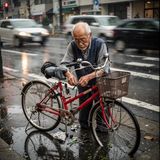
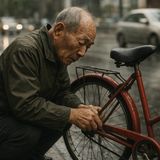
“A candid street photo of an elderly Japanese man repairing a red bicycle in light rain, reflections on wet pavement, shallow depth of field, 50mm lens, natural skin texture, imperfect framing, motion blur from passing cars, cinematic but realistic, no stylization.”
“Vintage minimalist restaurant logo for "Caffè Florian", retro cloche dome with steam and "Est. 1720" banner, classic typography, warm brown and cream tones, subtle texture on light background, vector emblem style.”
“Close portrait of a battle-worn paladin in ornate engraved plate armor, hair braided with small beads, faint scars and dirt on the skin, warm torchlight reflecting off metal, shallow depth of field, bokeh sparks, lifelike eyes, highly detailed texture on leather straps and cloth underlayer.”
Uncategorized
“Perfectly symmetrical mandala made entirely of real flowers, petals, leaves, fruits, and seeds in vibrant natural colors, intricate layered patterns with radial symmetry, top-down view on a soft neutral background, hyper-detailed organic textures and subtle shadows, photorealistic, 8K masterpiece.”
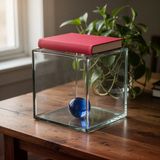
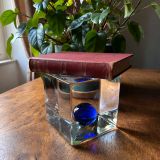
“A glass cube on a wooden table. Inside the cube is a small blue sphere. On top of the cube sits a red book. A green plant is behind the cube, partially visible through the glass. Soft window light from the left.”

“Create a clear, 45° top-down isometric miniature 3D cartoon scene of Japan's signature dish: sushi, with soft refined textures, realistic PBR materials, gentle lighting, on a small raised diorama base with minimal garnish and plate. Solid light blue background. At top-center: 'JAPAN' in large bold text, 'SUSHI' below it, small flag icon. Perfectly centered, ultra-clean, high-clarity, square format.”
“Hyper-photorealistic full-body portrait of a female superhero standing triumphantly on a New York skyscraper rooftop at golden sunset, wearing a classic modest superhero costume with flowing cape, chest emblem, gloves, and boots in red and blue colors, practical design, short hair, strong determined heroic expression looking into the distance, powerful confident stance with hands on hips and cape billowing dramatically in the wind, detailed urban cityscape background, warm natural sunlight with sharp shadows and fabric highlights, ultra-sharp textures on suit, hair, and concrete, 8K masterpiece, empowering family-friendly style.”
“Hyper-photorealistic scene of fluffy baby animals—a golden retriever puppy, tabby kitten, baby bunny, and red fox kit—with big expressive eyes and ultra-detailed soft fur, playfully chasing butterflies and tumbling together in a lush wildflower meadow, warm golden sunrise light with god rays and dew sparkles, joyful wholesome vibe, 8K masterpiece.”
“Hyper-photorealistic interior of a lush Victorian glass greenhouse filled with exotic tropical plants, vibrant blooming orchids, tall ferns, colorful butterflies in flight, sunlight filtering through ornate glass roof creating realistic caustics and dew on leaves, intricate iron framework visible, misty atmosphere, 8K masterpiece.”
“Close portrait of a battle-worn paladin in ornate engraved plate armor, hair braided with small beads, faint scars and dirt on the skin, warm torchlight reflecting off metal, shallow depth of field, bokeh sparks, lifelike eyes, highly detailed texture on leather straps and cloth underlayer.”
Top Matchups
See how FLUX.2 [dev] Turbo performs head-to-head against other AI models, ranked by community votes in blind comparisons.
vs Stable Diffusion 3.5 Large
Challenge: Apollo 11: Journey to Tranquility
67% W · 0% L · 33% T
vs Seedream 4.5
Challenge: Isometric Miniature Diorama Scenes
0% W · 67% L · 33% T
vs ImagineArt 1.5 (Preview)
Challenge: Geometric Composition
50% W · 0% L · 50% T
vs Grok Imagine Image
Challenge: Modern Clean Menu
0% W · 100% L
vs FLUX.2 [flex]
Challenge: Intricate Floral Mandala
50% W · 0% L · 50% T
FLUX.2 [dev] Turbo is best for
See all Use CasesThis model ranks fourth for text rendering with a 57.4% win rate and excels in product and branding tasks with a 69.2% win rate. While it maintains a high 76.5% win rate for portraits, it demonstrates lower performance in photorealism, where it currently ranks 19th out of 22 models.
Gallery
View all 16 imagesFLUX.2 [dev] Turbo FAQ
How much does FLUX.2 [dev] Turbo cost?
FLUX.2 [dev] Turbo starts at $0.008 per image through Lumenfall. Pricing varies by provider. Lumenfall does not add any markup to provider pricing.
How do I use FLUX.2 [dev] Turbo via API?
You can use FLUX.2 [dev] Turbo through Lumenfall's OpenAI-compatible API. Send requests to the unified endpoint with model ID "flux.2-dev-turbo". Code examples are available in Python, JavaScript, and cURL.
Which providers offer FLUX.2 [dev] Turbo?
FLUX.2 [dev] Turbo is available through fal.ai on Lumenfall. Lumenfall automatically routes requests to the best available provider.
What is the maximum resolution for FLUX.2 [dev] Turbo?
FLUX.2 [dev] Turbo supports images up to 2048x2048 resolution.
Overview
FLUX.2 [dev] Turbo is an accelerated image generation model developed by fal.ai, designed to provide high-fidelity outputs with significantly lower latency than the base FLUX.2 [dev] model. It uses architectural distillation to achieve high performance at a lower cost, maintaining the composition and detail of the original Black Forest Labs weights while requiring fewer sampling steps. This open-weights model is released under a non-commercial license and is optimized for workflows where generation speed and cost-efficiency are prioritized over maximum sampling depth.
Strengths
- Generation Velocity: Significant reduction in inference time compared to the standard FLUX.2 [dev], capable of producing high-resolution images in a fraction of the steps.
- Anatomical and Text Fidelity: Retains the core architectural strengths of the FLUX family, specifically in rendering legible text and accurate human anatomy (such as hands and limbs).
- Instruction Following: High responsiveness to complex, multi-subject prompts involving specific spatial arrangements or lighting conditions.
- Operational Efficiency: Lower compute requirements and a reduced price point ($0.008 starting price) make it suitable for high-volume prototyping or iterative design processes.
Limitations
- Non-Commercial License: The model is restricted to research and personal use; it cannot be integrated into commercial products or used for profit-generating workflows.
- Detail Ceiling: Due to the distillation process, it may occasionally lack the extreme fine-grain texture or subtle lighting nuances found in the full FLUX.2 [dev] model during multi-step high-CFG generations.
- Reduced Flexibility: This turbo variant is specifically tuned for a lower step count, which may make it less responsive to manual sampling adjustments compared to its non-distilled counterpart.
Technical Background
FLUX.2 [dev] Turbo is part of the FLUX.2 family, utilizing a distilled version of the original diffusion transformer (DiT) architecture. By applying adversarial or sequence-level distillation techniques, fal.ai optimized the original Black Forest Labs weights to converge in fewer iterations without sacrificing the structural integrity of the generated output. The model accepts both text and image inputs, allowing for versatile image-to-image and text-to-image workflows.
Best For
- Iterative Design: Rapidly testing different prompt variations or character concepts without the wait times associated with standard diffusion models.
- Prototyping: Building proof-of-concept creative tools where speed-of-feedback is critical for user experience.
- Research and Personal Projects: High-quality image generation for non-commercial academic research or hobbyist exploration.
FLUX.2 [dev] Turbo is available through Lumenfall’s unified API and playground, allowing developers to integrate fast, state-of-the-art image generation into their research environments with minimal configuration.
Try FLUX.2 [dev] Turbo in Playground
Generate images with custom prompts — no API key needed.