Image Editing
Source
Edit instruction
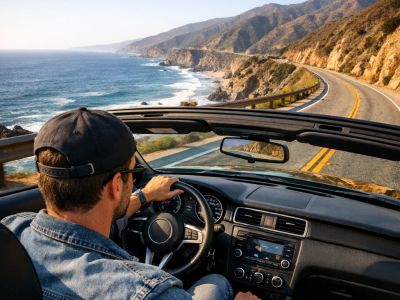
“Make a photo of the man driving the car down the California coastline”
AI Image Editing Model
OpenAI's state-of-the-art image generation model with better instruction following and adherence to prompts
gpt-image-1.5
Starting from
By quality
Prices shown are in USD
See all providersFastest generation through replicate at 34,702ms median latency with 94.1% success rate.
Aggregated from real API requests over the last 30 days.
| # | Provider | p50 Gen Time | p95 Gen Time | Success Rate | TTFB (p50) |
|---|---|---|---|---|---|
| 1 | replicate | 34,702ms | 42,566ms | 94.1% | 35,276ms |
| 2 | openai | 39,330ms | 58,033ms | 75.9% | 38,727ms |
| 3 | fal | 49,823ms | 87,593ms | 100.0% | 50,112ms |
GPT Image 1.5 is available from 3 providers, with per-image pricing starting at $0.009 through fal.ai.
fal/gpt-image-1.5-edit
replicate/gpt-image-1.5
openai/gpt-image-1.5
Developers can integrate GPT Image 1.5 through the Lumenfall OpenAI-compatible API to automate text-to-image generation and complex image editing workflows. This single endpoint provides programmatic access to OpenAI's state-of-the-art vision capabilities for scalable media production.
https://api.lumenfall.ai/openai/v1
gpt-image-1.5
curl -X POST \ https://api.lumenfall.ai/openai/v1/images/edits \ -H "Authorization: Bearer $LUMENFALL_API_KEY" \ -F "model=gpt-image-1.5" \ -F "[email protected]" \ -F "prompt=Add a starry night sky to this image" \ -F "size=1024x1024"# Response:# { "created": 1234567890, "data": [{ "url": "https://...", "revised_prompt": "..." }] }import OpenAI from 'openai';import fs from 'fs';const client = new OpenAI({ apiKey: 'YOUR_API_KEY', baseURL: 'https://api.lumenfall.ai/openai/v1'});const response = await client.images.edit({ model: 'gpt-image-1.5', image: fs.createReadStream('source.png'), prompt: 'Add a starry night sky to this image', size: '1024x1024'});// { created: 1234567890, data: [{ url: "https://...", revised_prompt: "..." }] }console.log(response.data[0].url);from openai import OpenAIclient = OpenAI( api_key="YOUR_API_KEY", base_url="https://api.lumenfall.ai/openai/v1")response = client.images.edit( model="gpt-image-1.5", image=open("source.png", "rb"), prompt="Add a starry night sky to this image", size="1024x1024")# { created: 1234567890, data: [{ url: "https://...", revised_prompt: "..." }] }print(response.data[0].url)| Parameter | Type | Description | Modes |
|---|---|---|---|
prompt
|
string | Required. Text prompt for image generation |
T2I
Edit
|
| Parameter | Type | Description | Modes |
|---|---|---|---|
size
|
string |
Image dimensions as WxH pixels (e.g. "1024x1024") or aspect ratio (e.g. "16:9")
1254x836
836x1254
1024x1024
1536x1024
1024x1536
WxH determines both shape and scale (aspect_ratio and resolution are ignored when size is provided). W:H format is equivalent to aspect_ratio.
|
T2I
Edit
|
aspect_ratio
|
string |
Aspect ratio of the output image (e.g. "16:9", "1:1")
2:3
1:1
3:2
Controls shape independently of scale. Use with resolution to control both. If size is also provided, size takes precedence. Any ratio is accepted and mapped to the nearest supported value.
|
T2I
Edit
|
resolution
|
string |
Output resolution tier (e.g. "1K", "4K")
1K
Controls scale independently of shape. Higher tiers produce larger images and cost more. If size is also provided, size takes precedence for scale. Any tier is accepted and mapped to the nearest supported value.
|
T2I
Edit
|
| Output |
size
|
aspect_ratio
+
resolution
|
|
|---|---|---|---|
| Flexible | |||
|
Custom
1024–1536px per side
|
"WxH" |
— | Any pixel dimensions within model constraints |
| Output |
size
|
aspect_ratio
+
resolution
|
|
|---|---|---|---|
| 1024 × 1536 | "1024x1536" |
or |
"2:3"
+
"1K"
|
| 1536 × 1024 | "1536x1024" |
or |
"3:2"
+
"1K"
|
| 1024 × 1024 | "1024x1024" |
or |
"1:1"
+
"1K"
|
| 836 × 1254 | "836x1254" |
or |
"2:3"
+
"1K"
|
| 1254 × 836 | "1254x836" |
or |
"3:2"
+
"1K"
|
size
Exact pixel dimensions
"1920x1080"
aspect_ratio
Shape only, default scale
"16:9"
resolution
Scale tier, preserves shape
"1K"
size is most specific and always wins. aspect_ratio and resolution control shape and scale independently.
7:1 on a model with
4:1 and 8:1,
you get 8:1.
0.5K 1K 2K 4K)
or megapixel tiers (0.25 1).
If the exact tier isn't available, you get the nearest one.
| Parameter | Type | Description | Modes |
|---|---|---|---|
image
|
file |
Required.
Input image(s) to edit
Supports PNG, JPEG, WebP.
Up to 10 images per request.
|
T2I
Edit
|
| Parameter | Type | Description | Modes |
|---|---|---|---|
response_format
|
string |
How to return the image
url
b64_json
Default:
"url" |
T2I
Edit
|
output_format
|
string |
Output image format
png
jpeg
gif
webp
avif
Gateway converts to requested format if provider doesn't support it natively.
|
T2I
Edit
|
output_compression
replicate
|
integer |
Compression level (0-100%)
Default:
90 |
T2I
Edit
|
n
|
integer |
Number of images to generate
Default:
1Gateway generates multiple images in parallel even if provider only supports 1.
|
T2I
Edit
|
Provider-specific passthrough fields, available only when the request is routed to the listed provider.
| Parameter | Type | Description | Modes |
|---|---|---|---|
|
Universal
|
|||
background
|
string |
Set whether the background is transparent or opaque or choose automatically
opaque
transparent
|
T2I
Edit
|
input_fidelity
|
string |
Control how much effort the model will exert to match the style and features, especially facial features, of input images
high
low
|
T2I
Edit
|
moderation
|
string |
Content moderation level
low
|
T2I
Edit
|
|
fal
|
|||
mask_image_url
|
string | The URL of the mask image to use for the generation. This indicates what part of the image to edit. |
T2I
Edit
|
sync_mode
|
boolean | If `True`, the media will be returned as a data URI and the output data won't be available in the request history. |
T2I
Edit
|
|
openai
|
|||
partial_images
|
integer | Number of partial images to generate in streaming responses. |
T2I
Edit
|
stream
|
boolean | Whether to stream image generation or edit events as they become available. |
T2I
Edit
|
user
|
string | Stable end-user identifier used by OpenAI abuse monitoring. |
T2I
Edit
|
|
replicate
|
|||
openai_api_key
|
string | Your OpenAI API key (optional - uses proxy if not provided) |
T2I
Edit
|
user_id
|
string | An optional unique identifier representing your end-user. This helps OpenAI monitor and detect abuse. |
T2I
Edit
|
How we handle parameters across different providers
Not every provider speaks the same language. When you send a parameter, we handle it in one of four ways depending on what the model supports:
| Behavior | What happens | Example |
|---|---|---|
passthrough |
Sent as-is to the provider | style, quality |
renamed |
Same value, mapped to the field name the provider expects | prompt |
converted |
Transformed to the provider's native format | size |
emulated |
Works even if the provider has no concept of it | n, response_format |
Parameters we don't recognize pass straight through to the upstream API, so provider-specific options still work.
GPT Image 1.5 holds an Elo rating of 1285 in text-to-image generation, ranking #2 globally, and maintains a #3 rank for image editing with an Elo of 1230. These scores reflect its superior instruction following and competitive performance across major open-vision leaderboards.
“Make a photo of the man driving the car down the California coastline”
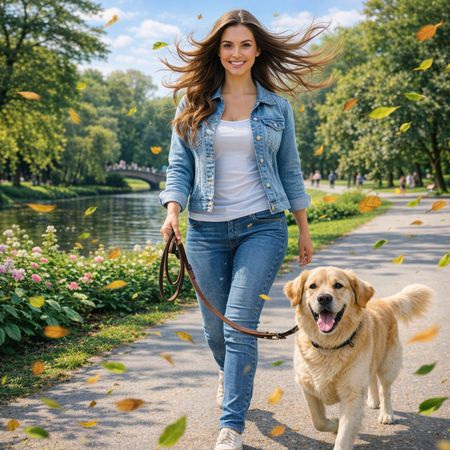
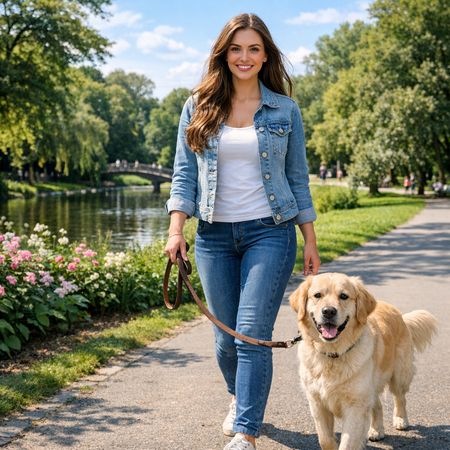
“Add dynamic motion to this photo: make hair blow in the wind, add leaves flying, energetic and lively feel.”
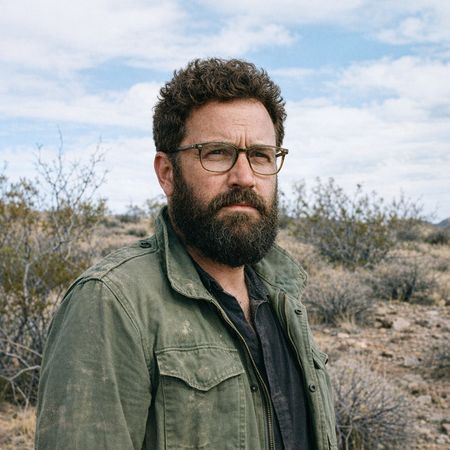
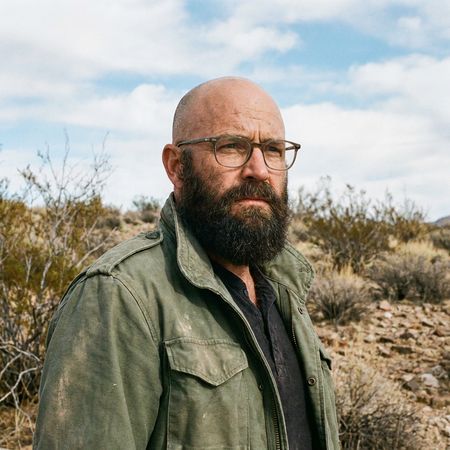
“Give the person a full, thick head of natural hair with realistic texture, density, and a natural hairline. Preserve facial features and lighting.”
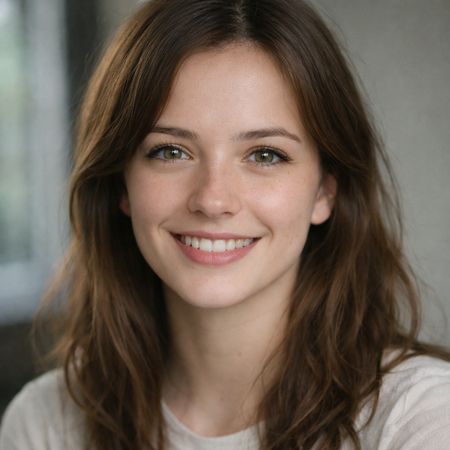
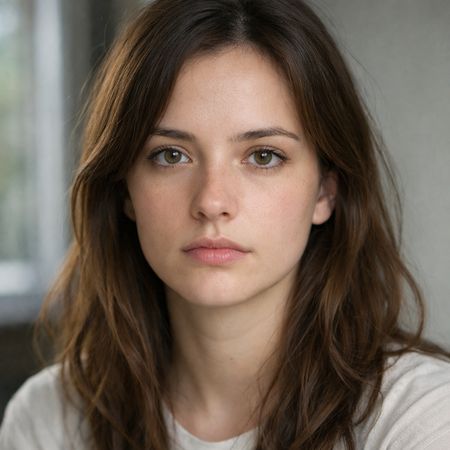
{
  "action": "image_edit",
  "reference": "uploaded neutral portrait",
  "change": "Warm genuine Duchenne smile: lips curved up, slight natural teeth, soft eye crinkles, subtle cheek raise",
  "details": "Realistic smiling skin (dimples if present, soft cheek shadows), slightly brighter eyes; keep exact eye shape/color/iris",
  "preserve_exact": "Face identity/structure, eyes/nose/lips/eyebrows, hair, skin texture/pores/freckles, makeup, clothing, head pose, background, lighting, shadows, framing",
  "no_changes": "No face shape change, no new features, no gaze shift, no hair/clothing/lighting/background edits",
  "style": "Ultra-photorealistic 8K portrait, sharp face focus, natural soft lighting, realistic skin glow"
}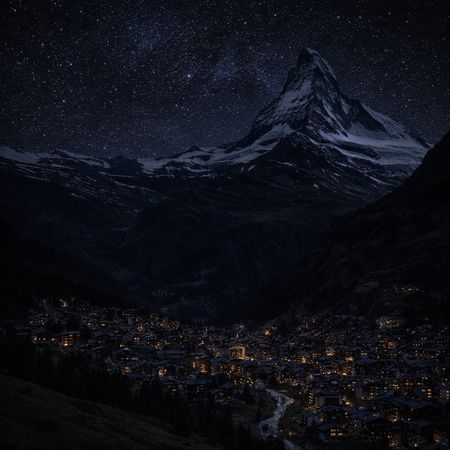
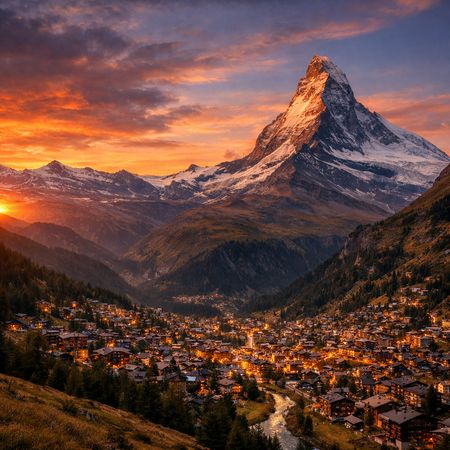
“Change the scene to night: a deep, dark sky with subtle, glistening stars visible behind the mountain.”
“Transform this photo into a Studio Ghibli–inspired illustration. Use soft pastel colors, hand-painted textures, gentle lighting, dreamy backgrounds, and a warm, nostalgic mood”
“Give the person a full, thick head of natural hair with realistic texture, density, and a natural hairline. Preserve facial features and lighting.”
{
  "action": "image_edit",
  "reference": "uploaded neutral portrait",
  "change": "Warm genuine Duchenne smile: lips curved up, slight natural teeth, soft eye crinkles, subtle cheek raise",
  "details": "Realistic smiling skin (dimples if present, soft cheek shadows), slightly brighter eyes; keep exact eye shape/color/iris",
  "preserve_exact": "Face identity/structure, eyes/nose/lips/eyebrows, hair, skin texture/pores/freckles, makeup, clothing, head pose, background, lighting, shadows, framing",
  "no_changes": "No face shape change, no new features, no gaze shift, no hair/clothing/lighting/background edits",
  "style": "Ultra-photorealistic 8K portrait, sharp face focus, natural soft lighting, realistic skin glow"
}“Create a caricature of me and my job. Make it exaggerated and humorous, incorporating my profession as a tv show anchor and my love for dogs and hockey.”
“Use Image 1 as the exact pose reference and Image 2 as the character reference. Recreate the person/character from Image 2 in the exact dynamic pose and body position from Image 1. Keep the exact face, hair, clothing style/details, and expression from Image 2. Match the lighting and environment of Image 1. The final image must show the character from Image 2 performing the precise action/pose from Image 1 with perfect anatomy and natural integration.”
See how GPT Image 1.5 performs head-to-head against other AI models, ranked by community votes in blind comparisons.


vs Grok Imagine Image
Challenge: Modern Clean Menu
50% W · 50% L


vs Nano Banana 2
Challenge: Fantasy Warrior
0% W · 50% L · 50% T


vs ImagineArt 1.5 (Preview)
Challenge: Geometric Composition
50% W · 50% L


vs Wan 2.6
Challenge: Golden Hour Stroll
50% W · 50% L


vs Nano Banana
Challenge: Bald man challenge
0% W · 100% L
GPT Image 1.5 leads the Portrait category with a first-place rank and 84.6% win rate, while also ranking #3 for Text Rendering and Product/Commercial usage. It performs significantly weaker in Anime generation, where it currently ranks #13 with a 26.3% win rate.
GPT Image 1.5 starts at $0.009 per image through Lumenfall. Pricing varies by provider. Lumenfall does not add any markup to provider pricing.
You can use GPT Image 1.5 through Lumenfall's OpenAI-compatible API. Send requests to the unified endpoint with model ID "gpt-image-1.5". Code examples are available in Python, JavaScript, and cURL.
GPT Image 1.5 is available through Replicate, OpenAI, and fal.ai on Lumenfall. Lumenfall automatically routes requests to the best available provider.
GPT Image 1.5 supports images up to 1536x1536 resolution.
GPT Image 1.5 is OpenAI’s latest flagship image generation model, designed to transform complex text descriptions into high-fidelity visual assets. It represents a significant iteration in the GPT-image family, focusing on narrowing the gap between user intent and generated output. The model is distinctive for its high level of steerability, allowing users to define specific spatial arrangements and intricate details that previous iterations often elided.
GPT Image 1.5 is built upon a transformer-based diffusion architecture, leveraging OpenAI’s advancements in large-scale multimodal pre-training. By utilizing a sophisticated text encoder similar to those found in the GPT-4 family, the model can internalize nuanced semantic meanings before translating them into the visual latent space. This architecture enables the model to treat image generation as a sequence-informed task, improving the alignment between the text tokens and the resulting pixels.
GPT Image 1.5 is ideal for professional workflows including advertising concept art, architectural visualization, and detailed character design where precision is non-negotiable. Its ability to follow strict formatting makes it a strong candidate for automated content pipelines and social media asset generation.
You can experiment with GPT Image 1.5 and compare its outputs with other top-tier models through the Lumenfall playground or integrate it into your production environment using the Lumenfall unified API.
Generate images with custom prompts — no API key needed.