Wan 2.6
AI Image & Video Model
Alibaba's multimodal generation model from the Wan AI suite, supporting text-to-video, image-to-video, reference-to-video with audio, and text-to-image, in both Chinese and English
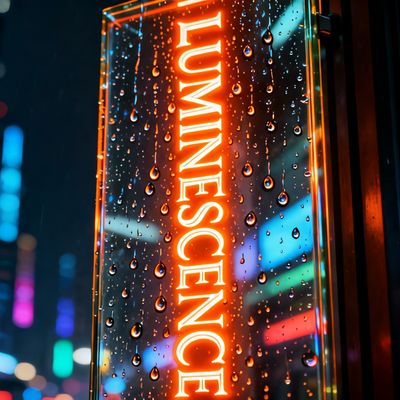
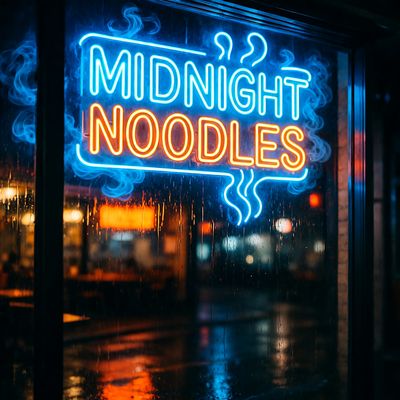
Details
wan-2.6
Starting from
Popular formats
Prices shown are in USD
Full pricing detailsProvider Performance
Fastest generation through alibaba at 5,375ms median latency with 100.0% success rate.
Aggregated from real API requests over the last 30 days.
Generation Time
Success Rate
Time to First Byte
Provider Rankings
| # | Provider | p50 Gen Time | p95 Gen Time | Success Rate | TTFB (p50) |
|---|---|---|---|---|---|
| 1 | alibaba | 5,375ms | 39,328ms | 100.0% | 9,092ms |
Providers & Pricing (1)
Wan 2.6 is available exclusively through Alibaba Cloud, starting at $0.03/video.
alibaba/wan-2.6-r2v
Input
Output
Wan 2.6 API Async video generation
Integrate Wan 2.6 into your workflow for text-to-image generation and advanced image editing via Lumenfall's unified OpenAI-compatible API. This endpoint supports both direct text prompting and reference image guidance to maintain stylistic consistency across your generated media.
https://api.lumenfall.ai/v1
wan-2.6
Code Examples
Video to Video
/v1/videos/generations# Step 1: Submit video-to-video requestVIDEO_ID=$(curl -s -X POST \ https://api.lumenfall.ai/v1/videos \ -H "Authorization: Bearer $LUMENFALL_API_KEY" \ -H "Content-Type: application/json" \ -d '{ "model": "wan-2.6", "prompt": "Apply cinematic color grading to @Video1", "video_url": "https://example.com/source.mp4", "keep_audio": true, "aspect_ratio": "16:9" }' | jq -r '.id')echo "Video ID: $VIDEO_ID"# Step 2: Poll for completionwhile true; do RESULT=$(curl -s \ https://api.lumenfall.ai/v1/videos/$VIDEO_ID \ -H "Authorization: Bearer $LUMENFALL_API_KEY") STATUS=$(echo $RESULT | jq -r '.status') echo "Status: $STATUS" if [ "$STATUS" = "completed" ]; then echo $RESULT | jq -r '.output.url' break elif [ "$STATUS" = "failed" ]; then echo $RESULT | jq -r '.error.message' break fi sleep 5doneconst BASE_URL = 'https://api.lumenfall.ai/v1';const API_KEY = 'YOUR_API_KEY';// Step 1: Submit video-to-video requestconst submitRes = await fetch(`${BASE_URL}/videos`, { method: 'POST', headers: { 'Authorization': `Bearer ${API_KEY}`, 'Content-Type': 'application/json' }, body: JSON.stringify({ model: 'wan-2.6', prompt: 'Apply cinematic color grading to @Video1', video_url: 'https://example.com/source.mp4', keep_audio: true, aspect_ratio: '16:9' })});const { id: videoId } = await submitRes.json();console.log('Video ID:', videoId);// Step 2: Poll for completionwhile (true) { const pollRes = await fetch(`${BASE_URL}/videos/${videoId}`, { headers: { 'Authorization': `Bearer ${API_KEY}` } }); const result = await pollRes.json(); if (result.status === 'completed') { console.log('Video URL:', result.output.url); break; } else if (result.status === 'failed') { console.error('Error:', result.error.message); break; } await new Promise(r => setTimeout(r, 5000));}import requestsimport timeBASE_URL = "https://api.lumenfall.ai/v1"API_KEY = "YOUR_API_KEY"HEADERS = { "Authorization": f"Bearer {API_KEY}", "Content-Type": "application/json"}# Step 1: Submit video-to-video requestresponse = requests.post( f"{BASE_URL}/videos", headers=HEADERS, json={ "model": "wan-2.6", "prompt": "Apply cinematic color grading to @Video1", "video_url": "https://example.com/source.mp4", "keep_audio": True, "aspect_ratio": "16:9" })video_id = response.json()["id"]print(f"Video ID: {video_id}")# Step 2: Poll for completionwhile True: result = requests.get( f"{BASE_URL}/videos/{video_id}", headers=HEADERS ).json() if result["status"] == "completed": print(f"Video URL: {result['output']['url']}") break elif result["status"] == "failed": print(f"Error: {result['error']['message']}") break time.sleep(5)Parameter Reference
Core Parameters
| Parameter | Type | Description | Modes |
|---|---|---|---|
prompt
|
string | Required. Text prompt for video generation |
T2I
Edit
T2V
I2V
V2V
|
negative_prompt
|
string | Negative prompt to guide generation away from undesired content |
T2I
Edit
T2V
I2V
V2V
|
seed
|
integer | Random seed for reproducibility |
T2I
Edit
T2V
I2V
V2V
|
duration
|
number | Video duration in seconds |
T2I
Edit
T2V
I2V
V2V
|
Size & Layout
| Parameter | Type | Description | Modes |
|---|---|---|---|
size
|
string |
Video dimensions as WxH pixels (e.g. "1920x1080") or aspect ratio (e.g. "16:9")
WxH determines both shape and scale (aspect_ratio and resolution are ignored when size is provided). W:H format is equivalent to aspect_ratio.
|
T2I
Edit
T2V
I2V
V2V
|
aspect_ratio
|
string |
Aspect ratio of the output video (e.g. "16:9", "1:1")
Controls shape independently of scale. Use with resolution to control both. If size is also provided, size takes precedence. Any ratio is accepted and mapped to the nearest supported value.
|
T2I
Edit
T2V
I2V
V2V
|
resolution
|
string |
Output resolution tier (e.g. "1K", "4K")
Controls scale independently of shape. Higher tiers produce larger videos and cost more. If size is also provided, size takes precedence for scale. Any tier is accepted and mapped to the nearest supported value.
|
T2I
Edit
T2V
I2V
V2V
|
size
Exact pixel dimensions
"1920x1080"
aspect_ratio
Shape only, default scale
"16:9"
resolution
Scale tier, preserves shape
"1K"
Priority when combined
size is most specific and always wins. aspect_ratio and resolution control shape and scale independently.
How matching works
7:1 on a model with
4:1 and 8:1,
you get 8:1.
0.5K 1K 2K 4K)
or megapixel tiers (0.25 1).
If the exact tier isn't available, you get the nearest one.
Media Inputs
| Parameter | Type | Description | Modes |
|---|---|---|---|
input_reference
|
array | Required for I2V. Input image(s) to animate into video |
T2I
Edit
T2V
I2V
V2V
|
input_video
|
string | Required. Input video URL to transform |
T2I
Edit
T2V
I2V
V2V
|
Multi-Shot Control
| Parameter | Type | Description | Modes |
|---|---|---|---|
shot_type
alibaba
|
string |
Whether the generated video uses a single continuous shot or multiple switching shots.
multi
single
Default:
"single" |
T2I
Edit
T2V
I2V
V2V
|
Output & Format
| Parameter | Type | Description | Modes |
|---|---|---|---|
n
|
integer |
Number of videos to generate
Default:
1Gateway generates multiple videos in parallel even if provider only supports 1.
|
T2I
Edit
T2V
I2V
V2V
|
Additional Parameters
Provider-specific passthrough fields, available only when the request is routed to the listed provider.
| Parameter | Type | Description | Modes |
|---|---|---|---|
|
alibaba
|
|||
reference_video_urls
|
array | Deprecated reference-video-only field. Use reference_urls for new integrations. |
T2I
Edit
T2V
I2V
V2V
|
watermark
|
boolean | Whether to add the provider watermark to the generated media. |
T2I
Edit
T2V
I2V
V2V
|
Parameter Normalization
How we handle parameters across different providers
Not every provider speaks the same language. When you send a parameter, we handle it in one of four ways depending on what the model supports:
| Behavior | What happens | Example |
|---|---|---|
passthrough |
Sent as-is to the provider | style, quality |
renamed |
Same value, mapped to the field name the provider expects | prompt |
converted |
Transformed to the provider's native format | size |
emulated |
Works even if the provider has no concept of it | n, response_format |
Parameters we don't recognize pass straight through to the upstream API, so provider-specific options still work.
Wan 2.6 is best for
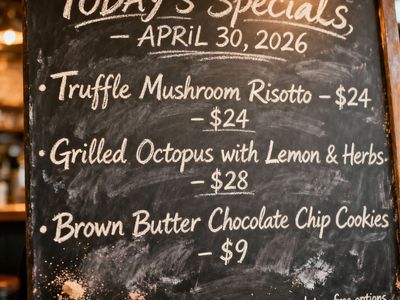
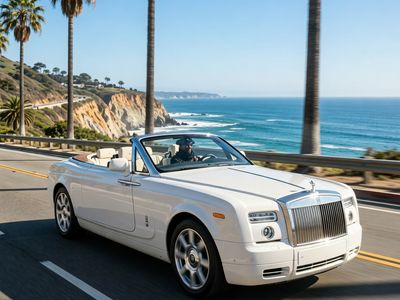
See all Use CasesAlibaba's Wan 2.6 excels in photorealism where it ranks 6th with a 48.8% win rate, though it struggles with text rendering ranking 20th and portrait generation at an 18.2% win rate. It serves as a middle-tier option for anime and commercial branding tasks, ranking 10th and 13th in those respective categories.
Wan 2.6 FAQ
How much does Wan 2.6 cost?
Wan 2.6 starts at $0.03 per image through Lumenfall. Pricing varies by provider. Lumenfall does not add any markup to provider pricing.
How do I use Wan 2.6 via API?
You can use Wan 2.6 through Lumenfall's OpenAI-compatible API. Send requests to the unified endpoint with model ID "wan-2.6". Code examples are available in Python, JavaScript, and cURL.
Which providers offer Wan 2.6?
Wan 2.6 is available through Alibaba Cloud and fal.ai on Lumenfall. Lumenfall automatically routes requests to the best available provider.
Overview
Wan 2.6 is a text-to-image generation model developed by Alibaba as part of the broader Wan AI suite. It is designed for high-fidelity image synthesis from bilingual prompts (English and Chinese) and supports image-to-image workflows through optional reference guidance. The model’s primary distinction lies in its balanced handling of complex prompt adherence and its ability to maintain stylistic consistency when provided with an initial image.
Strengths
- Bilingual Prompt Processing: The model demonstrates native-level understanding of both Chinese and English, allowing for nuanced cultural references and idiomatic descriptions without translation artifacts.
- Style Reference Integration: Unlike basic text-to-image models, Wan 2.6 can ingest a reference image to guide the aesthetic, lighting, and composition of the generated output while departing from the source content based on text instructions.
- Spatial and Compositional Control: It excels at placing subjects accurately within a frame according to descriptive spatial prompts (e.g., “in the bottom-left foreground”).
- Texture and Surface Detail: The model is particularly capable of rendering varied surface materials, such as metallic reflections, fabric weaves, and skin textures, with high clarity.
Limitations
- Text Rendering: While proficient at photorealistic imagery, the model may struggle with rendering complex, long-form legible text within images compared to models specifically optimized for typography.
- Contextual Complexity: In scenes with a high number of distinct interacting subjects (e.g., a crowd where everyone is performing a unique action), the model may occasionally blend attributes between subjects.
- Compute Requirements: Due to the complexity of its dual-modality input (text and image), inference times may be slightly higher than simpler, prompt-only diffusion models.
Technical Background
Wan 2.6 is built upon a Diffusion Transformer (DiT) architecture, which scales more effectively with data than traditional U-Net structures. It utilizes a large-scale multimodal pre-training strategy that aligns visual features with a bilingual LLM-based encoder to ensure precise semantic mapping. The model’s reference image capability is implemented via a dedicated vision encoder that injects latent style features into the diffusion process without overwriting the text-driven intent.
Best For
Alibaba’s Wan 2.6 is best suited for cross-cultural creative projects, localized marketing assets for both Western and Asian markets, and iterative design workflows where a “mood board” image is used to set the visual tone. It is particularly effective for concept art where stylistic consistency across a series of images is required.
Wan 2.6 is available for immediate testing and integration through Lumenfall’s unified API and playground, allowing developers to experiment with bilingual prompting and image-guided generation in a single interface.
Try Wan 2.6 in Playground
Generate images with custom prompts — no API key needed.