Text-to-Vector
Prompt
“A Capybara steering an excavator”
Recraft AI's text-to-vector model for generating production-ready SVG vector images with clean geometry, structured layers, and editable paths
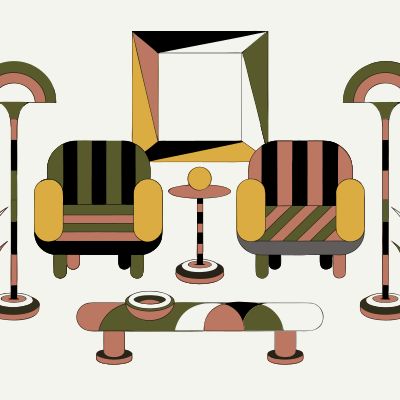

recraft-v4-svg
Starting from
Prices shown are in USD
See all providersRecraft V4 SVG is available from 2 providers, with per-image pricing starting at $0.08 through fal.ai.
fal/recraft-v4-svg
replicate/recraft-v4-svg
Integrate Recraft V4 SVG via Lumenfall's OpenAI-compatible API to generate editable vector images and scalable graphics directly within your application workflow.
https://api.lumenfall.ai/openai/v1
recraft-v4-svg
| Parameter | Type | Description | Modes |
|---|---|---|---|
prompt
|
string | Required. Text prompt for SVG vector generation |
T2Vec
|
| Parameter | Type | Description | Modes |
|---|---|---|---|
size
|
string |
Image dimensions as WxH pixels (e.g. "1024x1024") or aspect ratio (e.g. "16:9")
WxH determines both shape and scale (aspect_ratio and resolution are ignored when size is provided). W:H format is equivalent to aspect_ratio.
|
T2Vec
|
aspect_ratio
|
string |
Aspect ratio of the output image (e.g. "16:9", "1:1")
Controls shape independently of scale. Use with resolution to control both. If size is also provided, size takes precedence. Any ratio is accepted and mapped to the nearest supported value.
|
T2Vec
|
resolution
|
string |
Output resolution tier (e.g. "1K", "4K")
1K
Controls scale independently of shape. Higher tiers produce larger images and cost more. If size is also provided, size takes precedence for scale. Any tier is accepted and mapped to the nearest supported value.
|
T2Vec
|
| Output |
size
|
aspect_ratio
+
resolution
|
|
|---|---|---|---|
| Flexible | |||
|
Custom
1–14142px per side
|
"WxH" |
— | Any pixel dimensions within model constraints |
| Output |
size
|
aspect_ratio
+
resolution
|
|
|---|---|---|---|
| 768 × 1536 | "768x1536" |
or |
"1:2"
+
"1K"
|
| 1536 × 768 | "1536x768" |
or |
"2:1"
+
"1K"
|
| 896 × 1280 | "896x1280" |
or |
"10:14"
+
"1K"
|
| 1280 × 896 | "1280x896" |
or |
"14:10"
+
"1K"
|
| 832 × 1344 | "832x1344" |
or |
"6:10"
+
"1K"
|
| 896 × 1216 | "896x1216" |
or |
"3:4"
+
"1K"
|
| 1216 × 896 | "1216x896" |
or |
"4:3"
+
"1K"
|
| 832 × 1280 | "832x1280" |
or |
"2:3"
+
"1K"
|
| 1280 × 832 | "1280x832" |
or |
"3:2"
+
"1K"
|
| 866 × 1212 | "866x1212" |
or |
"10:14"
+
"1K"
|
| 1183 × 887 | "1183x887" |
or |
"4:3"
+
"1K"
|
| 916 × 1145 | "916x1145" |
or |
"4:5"
+
"1K"
|
| 1145 × 916 | "1145x916" |
or |
"5:4"
+
"1K"
|
| 1024 × 1024 | "1024x1024" |
or |
"1:1"
+
"1K"
|
| 887 × 1182 | "887x1182" |
or |
"3:4"
+
"1K"
|
| 724 × 1448 | "724x1448" |
or |
"1:2"
+
"1K"
|
| 1448 × 724 | "1448x724" |
or |
"2:1"
+
"1K"
|
| 793 × 1322 | "793x1322" |
or |
"6:10"
+
"1K"
|
| 836 × 1254 | "836x1254" |
or |
"2:3"
+
"1K"
|
| 1254 × 836 | "1254x836" |
or |
"3:2"
+
"1K"
|
| 768 × 1365 | "768x1365" |
or |
"9:16"
+
"1K"
|
| 1365 × 768 | "1365x768" |
or |
"16:9"
+
"1K"
|
| 1211 × 865 | "1211x865" |
or |
"14:10"
+
"1K"
|
| 768 × 1344 | "768x1344" |
or |
"9:16"
+
"1K"
|
| 896 × 1152 | "896x1152" |
or |
"4:5"
+
"1K"
|
| 1152 × 896 | "1152x896" |
or |
"5:4"
+
"1K"
|
| 1344 × 768 | "1344x768" |
or |
"16:9"
+
"1K"
|
size
Exact pixel dimensions
"1920x1080"
aspect_ratio
Shape only, default scale
"16:9"
resolution
Scale tier, preserves shape
"1K"
size is most specific and always wins. aspect_ratio and resolution control shape and scale independently.
7:1 on a model with
4:1 and 8:1,
you get 8:1.
0.5K 1K 2K 4K)
or megapixel tiers (0.25 1).
If the exact tier isn't available, you get the nearest one.
| Parameter | Type | Description | Modes |
|---|---|---|---|
response_format
|
string |
How to return the image
url
b64_json
Default:
"url" |
T2Vec
|
output_format
|
string |
Output image format
png
jpeg
gif
webp
avif
Gateway converts to requested format if provider doesn't support it natively.
|
T2Vec
|
output_compression
|
integer | Compression level for lossy formats (JPEG, WebP, AVIF) |
T2Vec
|
n
|
integer |
Number of images to generate
Default:
1Gateway generates multiple images in parallel even if provider only supports 1.
|
T2Vec
|
Provider-specific passthrough fields, available only when the request is routed to the listed provider.
| Parameter | Type | Description | Modes |
|---|---|---|---|
|
fal
|
|||
background_color
|
object | The preferable background color of the generated images. |
T2Vec
|
colors
|
array | An array of preferable colors |
T2Vec
|
enable_safety_checker
|
boolean | If set to true, the safety checker will be enabled. |
T2Vec
|
How we handle parameters across different providers
Not every provider speaks the same language. When you send a parameter, we handle it in one of four ways depending on what the model supports:
| Behavior | What happens | Example |
|---|---|---|
passthrough |
Sent as-is to the provider | style, quality |
renamed |
Same value, mapped to the field name the provider expects | prompt |
converted |
Transformed to the provider's native format | size |
emulated |
Works even if the provider has no concept of it | n, response_format |
Parameters we don't recognize pass straight through to the upstream API, so provider-specific options still work.
Recraft V4 SVG is ranked #1 in Text-to-Vector with an Elo of 1306 on the Lumenfall Arena, where real users pick the better image in blind comparisons. These rankings are based on 1 blind-vote competition.
1 model without pricing omitted.
“A Capybara steering an excavator”
“A Capybara steering an excavator”
“A Capybara steering an excavator”
See how Recraft V4 SVG performs head-to-head against other AI models, ranked by community votes in blind comparisons.
Recraft V4 SVG starts at $0.08 per image through Lumenfall. Pricing varies by provider. Lumenfall does not add any markup to provider pricing.
You can use Recraft V4 SVG through Lumenfall's OpenAI-compatible API. Send requests to the unified endpoint with model ID "recraft-v4-svg". Code examples are available in Python, JavaScript, and cURL.
Recraft V4 SVG is available through fal.ai and Replicate on Lumenfall. Lumenfall automatically routes requests to the best available provider.
Recraft V4 SVG is a specialized text-to-vector model developed by Recraft AI designed to generate production-ready vector graphics from natural language prompts. Unlike standard diffusion models that produce rasterized pixels (PNG/JPG), this model outputs natively scalable SVG files with defined geometric paths. Its distinguishing feature is the ability to generate clean, professional-grade vector code that maintains high visual fidelity across different zoom levels without pixelation.
Recraft V4 SVG belongs to the Recraft V4 architecture family, specifically optimized for the unique constraints of vector mathematics rather than just pixel-based noise reduction. The training approach focuses on the relationship between descriptive text and the underlying syntax of SVG files, ensuring that the model understands not just visual aesthetics, but also the structural requirements of scalable graphics. This architectural focus allows the model to bypass the “tracing” step typically required to turn AI-generated images into vectors.
Recraft V4 SVG is ideal for UI/UX designers creating custom icon sets, brand identity developers generating logos, and technical illustrators requiring scalable diagrams. It is particularly useful for workflows where the output must be edited in vector-based software following generation. You can experiment with and integrate Recraft V4 SVG into your applications through Lumenfall’s unified API and playground.
Generate images with custom prompts — no API key needed.